From the Site #002
Removing Aircraft Hangar Doors at Sydney Airport — Why We Didn't Give a Fixed Price
Up to six aircraft hangar doors to remove at Sydney Airport, with the crane class hanging on an engineered lift study. Why a fixed lump sum would have hidden the risk — and how a transparent pricing range served the client better.
Not Every Job Deserves a Fixed Price
One of the biggest misconceptions in construction is that every contractor should immediately provide a fixed lump sum.
Sometimes that simply isn’t the most professional answer.
This project was one of those situations.
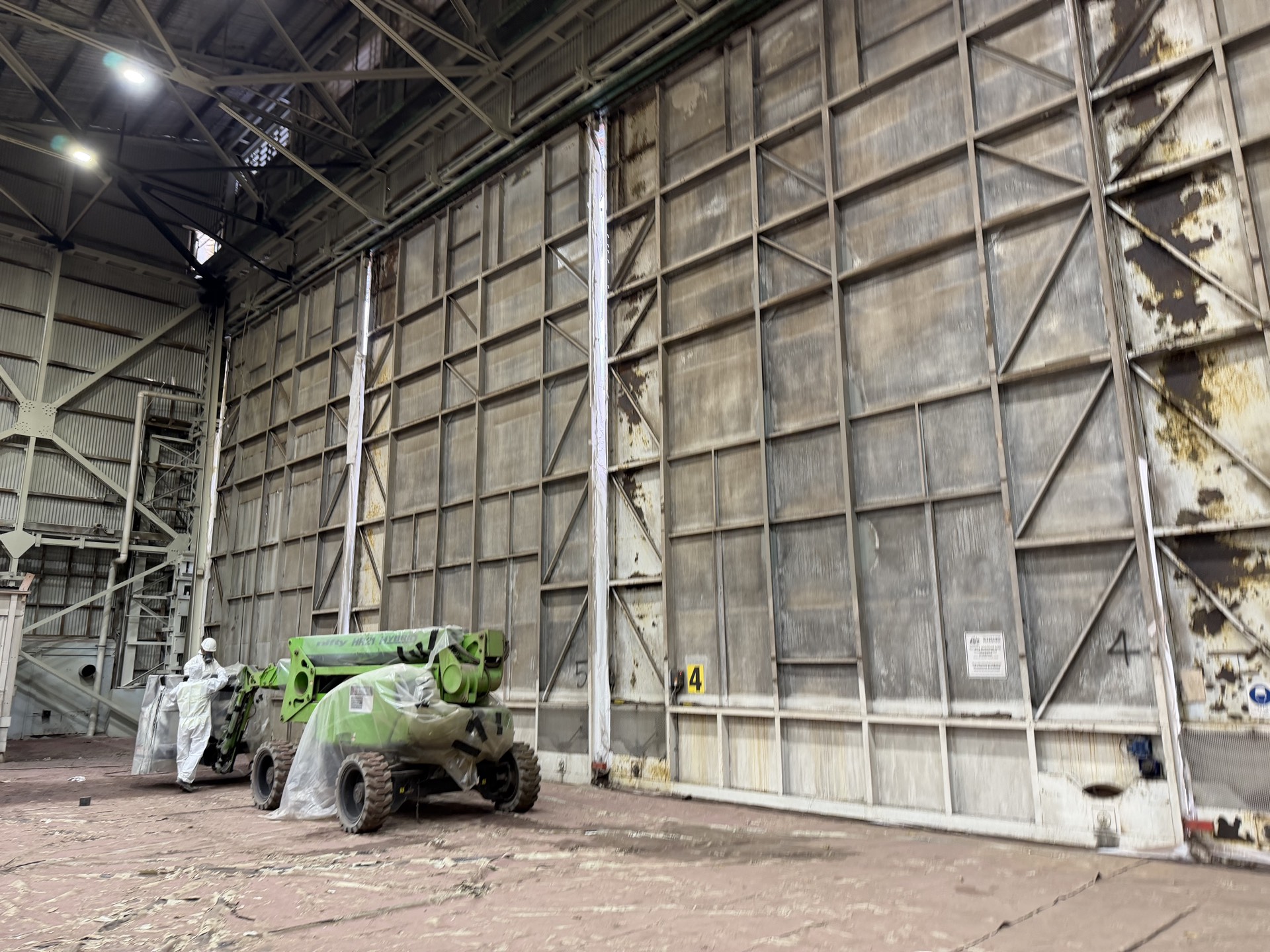
We were approached by HICON Building to provide pricing for the removal of aircraft hangar doors at Sydney Airport. Depending on the client’s final programme, the project could involve removing one door or all six.
At first glance it sounds like heavy demolition.
In reality, it was an engineering exercise long before it became a demolition project.
The Unknown That Controlled the Entire Price
Aircraft hangar doors are substantial structural components.
Until their exact weight is confirmed through engineering information or detailed assessment, every price is based on assumptions. Those assumptions matter — because the confirmed weight determines the crane class, the lifting methodology, the rigging configuration, the exclusion zones, the sequencing, and ultimately the project cost.
For this project, the difference between a 70-tonne crane and a 100-tonne crane represented a significant change in cost. One engineering decision had the potential to move the overall project value by tens of thousands of dollars.
Why We Wouldn’t Guess
Rather than selecting a crane size and hoping it proved adequate later, we structured our pricing around the information that was known and clearly identified the variables that still required confirmation.
The engineered lift study became the foundation of the proposal. Not an optional extra. A contractual precondition.
Only once a structural engineer confirms the lift methodology should lifting operations commence. That approach protects everyone involved. The client understands exactly what assumptions the price is based on. The contractor avoids pricing unknown risks. The project proceeds with the appropriate engineering controls in place.
Any quote that doesn’t include the lift study as a precondition should raise a question.
Working Inside Sydney Airport
Projects inside Sydney Airport introduce another level of complexity — access requirements, security, inductions, restricted working areas, potential night works, coordination with airport operations.
None of these factors are unusual, but every one of them affects programme and cost.
The base pricing assumed daytime operations. If airport requirements ultimately mandated night works — which carry a premium of 25–35% above standard daytime rates — the variation mechanism was already defined before contracts were signed.
Rather than disguising uncertainty, we documented it.
No surprises. No disputes. Just transparent commercial planning.
The Pricing Strategy
With crane capacity still to be confirmed and working hours yet to be determined, a single lump sum would have created unnecessary commercial risk for both parties.
Instead, we issued a structured pricing range.
- One door: $51,000 – $58,000 + GST
- Six doors: $211,000 – $258,000 + GST
The lower range assumed a 70-tonne crane operating during daytime hours. The upper range allowed for a 100-tonne crane. Night works, if ultimately required by Sydney Airport, were clearly identified as a separate contractual variation.
That allowed HICON Building to present pricing to their principals with confidence — because every assumption was transparent.
What Turns a Range into a Fixed Price?
Four pieces of information remained outstanding: the specific hangar, the domestic or international airside classification, the approved working hours, and the final access and induction requirements.
Combined with an engineered lift study and a site inspection of the door tracks, hinges and landing zones, those details would allow the pricing to transition from an indicative commercial range to a fully fixed contract sum. Most likely inside the range above.
Lessons From This Project
1. Not every demolition project starts with demolition. Complex structural removals often begin with engineering, planning and risk assessment long before machinery arrives on site.
2. Honest pricing builds trust. Clients are better served by understanding the variables that influence cost than receiving a fixed price built on assumptions that cannot yet be verified.
3. Restricted environments change everything. Airports, hospitals, defence facilities and live operational sites all introduce constraints that affect methodology, programme and cost. Those constraints should be identified early — not discovered after mobilisation.
4. Engineering should drive demolition. The safest demolition methodology is rarely determined by experience alone. It is developed through engineering, planning and disciplined execution.
Planning a Complex Structural Removal?
If your project involves engineered lifts, restricted sites or complex structural demolition, call us before you brief anyone else.
Getting the assumptions right at the start costs nothing. Getting them wrong mid-project costs weeks.
Related services
How HazWreck Can Help
Planning a project?
One Contractor, From Hazardous Materials to Handover
Call before the project starts — one conversation at planning stage can save weeks on programme.